
How Clinicians Can Help Autistic Adults Work Through Masking
- posted: Jan. 27, 2026
How Clinicians Can Help Autistic Adults Work Through Masking
Many autistic adults who enter therapy are exhausted—not just tired, but burned out and disconnected from who they are underneath years of performing a version of themselves that felt safer for the world.
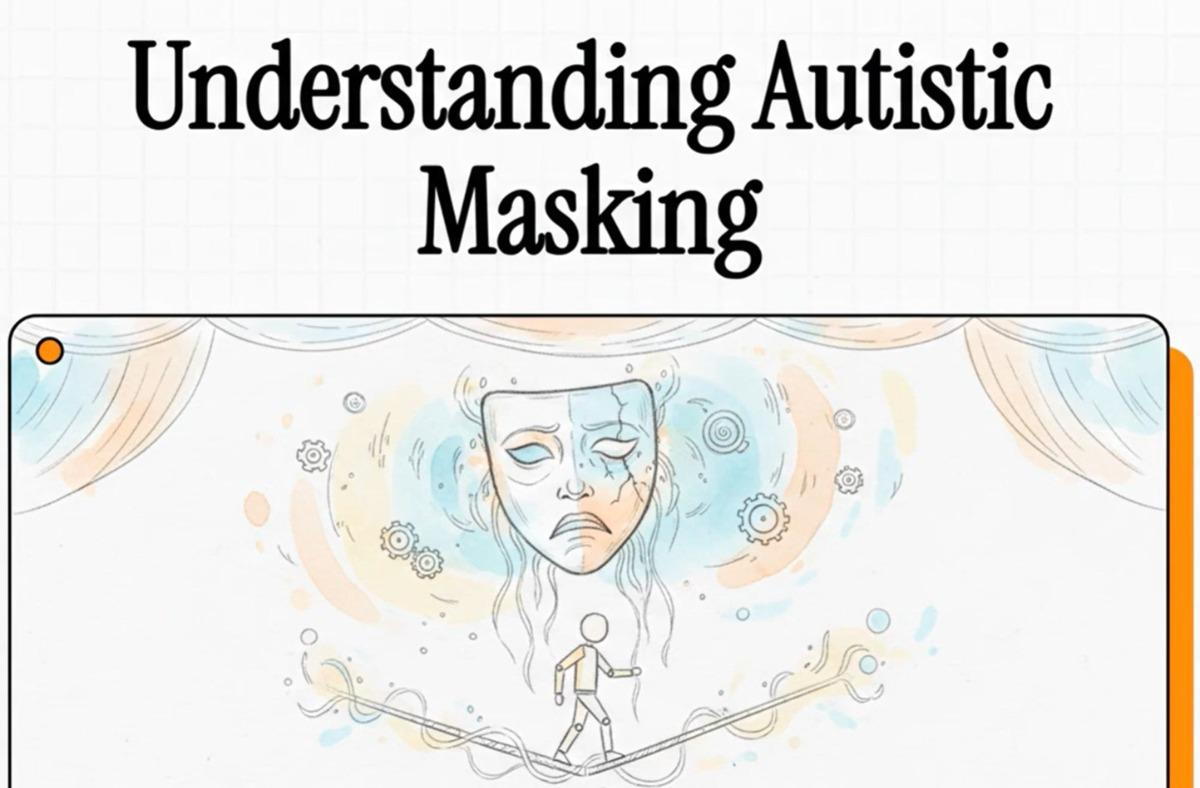
Masking is the conscious and unconscious effort to hide autistic traits to fit social expectations. For many adults, especially those diagnosed later in life, masking has been a lifelong survival strategy. While it may have helped them navigate school, work, and relationships, it often leads to anxiety, depression, identity confusion, chronic stress, and autistic burnout.
Helping clients work through masking requires a neurodiversity-affirming lens, a polyvagal-informed understanding of safety, and awareness of executive functioning differences that shape daily life.
Why Masking Happens: A Nervous System Perspective
Masking is not a personality trait. It is a nervous system adaptation.
Many autistic adults learned early that their natural communication, movements, sensory needs, and interests were not accepted. The nervous system adapted with a simple message: Be someone else to stay safe.
Over time, this becomes automatic. Clients may not realize they are masking—they only know they feel constantly drained.
Signs a Client Is Struggling with Masking
Clients may describe:
● Feeling fake or disconnected from themselves
● Exhaustion after social interaction
● Replaying conversations for hours
● Crashing at home after work
● Identity confusion after a late diagnosis
You may also observe anxiety, shutdowns in private, alexithymia, and executive functioning struggles that worsen under stress.
Safety Before Authenticity
The goal is not sudden unmasking. The goal is safety first.
Clients need to experience: “I can be more myself here, and nothing bad happens.”
Create Safety in Session
● Use predictable structure
● Reduce sensory strain
● Communicate directly and clearly
● Allow movement, stimming, and no eye contact
● Slow the pace for processing time
Simple statements like, “You don’t have to make eye contact here,” can significantly reduce nervous system strain.
Executive Functioning and the Cost of Masking
Masking consumes cognitive energy. For clients with executive functioning differences, this often leads to:
● Difficulty starting tasks after social interaction
● Increased forgetfulness
● Emotional dysregulation
● Feeling “lazy” when they are actually depleted
Normalize this experience. Explain the mental load masking requires.
Helping Clients Identify the Mask
Many adults don’t know what is authentic versus what is performance.
Gentle Exploration Questions
● When do you feel most drained after interacting with others?
● What do you stop yourself from doing around people?
● How do you act differently at home compared to work?
Masking Awareness Checklist
● Rehearsing conversations
● Copying others’ mannerisms
● Forcing facial expressions
● Hiding interests
● Suppressing stimming
● Avoiding sensory accommodations
Seeing these patterns written out is often validating.
Practical Therapy Tools
Energy Audit
Track social interaction, energy levels, sensory load, and recovery time to reveal patterns.
The “5% More Yourself” Exercise
Identify one place where the client can be slightly more authentic this week.
Permission Scripts
Practice phrases that help clients request accommodations or communicate needs.
Identity Prompts
Explore childhood interests, calming behaviors, and parts of self that feel most real.
Sensory Recovery Plan
Develop a post-social routine focused on nervous system recovery.
Common Pitfalls to Avoid
● Encouraging social skills work without addressing masking cost
● Mislabeling burnout as lack of motivation
● Pushing exposure before safety
● Using vague language or metaphors
● Expecting quick emotional processing
What Progress Looks Like
Progress may include:
● Asking for sensory adjustments
● Stopping apologies for stimming
● Scheduling downtime intentionally
● Describing preferences instead of expectations
These are meaningful clinical wins.
Supporting Autistic Adults in South Carolina
Across South Carolina, more autistic adults are seeking therapy for burnout, anxiety, and identity struggles related to masking. Clinicians in the Upstate can meet this need with informed, compassionate, neurodiversity-affirming care.
Clinician Checklist
In Your Office
● ☐ Reduce sensory strain
● ☐ Use direct communication
● ☐ Allow movement and stimming
● ☐ Offer predictable structure
In Your Work
● ☐ Validate masking as survival
● ☐ Normalize energy depletion
● ☐ Explore identity gently
● ☐ Build safety before change
With Your Client
● ☐ Identify where masking occurs
● ☐ Practice small authenticity steps
● ☐ Create recovery plans
● ☐ Support accommodation scripts
Get Involved
Upstate Carolina Autism Associates offers education, events, and resources to help clinicians better support autistic individuals across South Carolina.
● Attend upcoming trainings and events
● Subscribe to the newsletter
● Follow Upstate Carolina Autism Associates for clinician resources
Closing Encouragement
Many autistic adults have spent their lives becoming who the world expected them to be. Therapy can be the first place they learn who they truly are.
When we offer safety, understanding, and practical tools, we are not asking clients to unmask—we are giving them permission to rest.
And rest is often where healing begins.
Check out this YouTube video:
https://www.youtube.com/watch?v=nc_KyAxPeHY
Contact Me

